


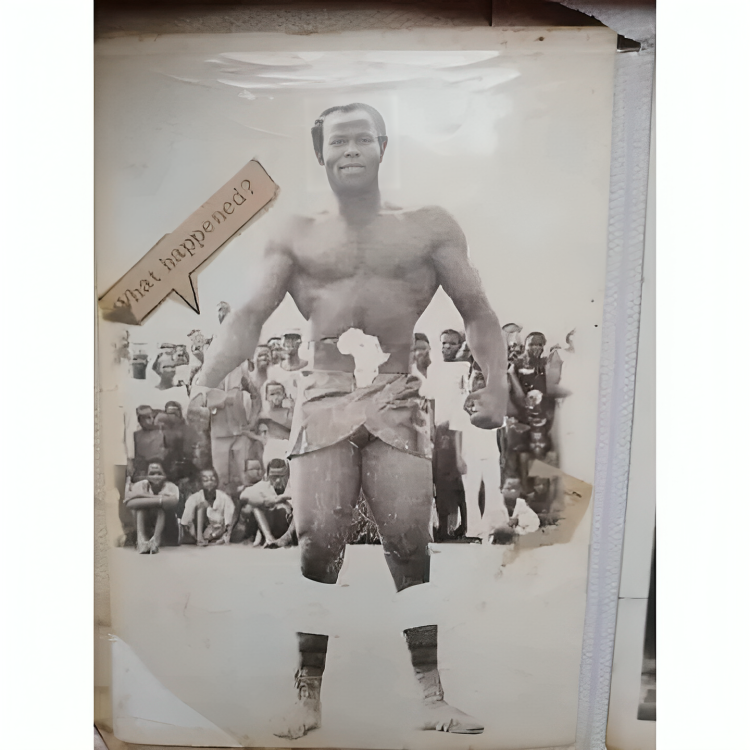
Nigeria’s rich cultural history is filled with extraordinary figures whose lives have transcended time and become legends. Among such unforgettable personalities is Hassan Kumar, famously known as “Hungry Lion”, an Ebira native widely regarded as one of the strongest men ever produced in Kogi State and the former Kwara State.
To the Ebira people and many Nigerians who witnessed or heard of his exploits, Hungry Lion was not just a man — he was a phenomenon.
Who Was Hassan Kumar “Hungry Lion”?
Hassan Kumar, popularly called Hungry Lion, hailed from Ebira land in present-day Kogi State, specifically within what was once known as Kogi Central Senatorial District during the Old Kwara State era.
Historical accounts and eyewitness testimonies describe him as a giant of uncommon stature, standing well over 8 feet tall, with a body built purely for raw strength. His intimidating physique alone was enough to command respect wherever he went.
Legendary Feats That Defined Hungry Lion
Hungry Lion’s reputation was built on astonishing demonstrations of physical power that bordered on the unbelievable. Some of his most famous feats include:
- Pulling a vehicle using a rope clenched in his teeth
- Carrying up to five full bags of cement on his chest
- Lifting and transporting a motorcycle with a rider balanced on his shoulder
These acts were not staged performances but real-life displays that earned him widespread recognition across Kwara State, Kogi State, and beyond. Many who witnessed him believed that even modern heavyweight champions would struggle to match his natural strength.
Strong Yet Humble: His Personal Life
Despite his fearsome nickname and towering appearance, Hassan Kumar was known to be calm, humble, and approachable. Those close to him often described him as a man of discipline and simplicity.
Hungry Lion was married twice — first to an Ebira woman, and later to a woman from Maiduguri. From his first marriage, he had a son who is believed to be living in Kuroko, an Ebira community in Kogi State.
A Symbol of Ebira Strength and Resilience
To the Ebira people, Hungry Lion represents more than physical power. He symbolizes resilience, courage, and natural greatness. His story is often told as proof that Ebira land has produced men of exceptional ability who left lasting marks on Nigerian history.
Even decades after his death, his name still comes up in conversations about Nigeria’s strongest men, local folklore, and cultural heritage.
Death and Legacy
Hassan Kumar “Hungry Lion” passed away on November 4, 1988, in Kaduna State. He was later laid to rest in his hometown in Kogi State, according to tradition.
Though he is no longer alive, his legacy remains very much alive. His story continues to inspire young people, cultural historians, and lovers of Nigerian heritage who see him as a true icon of strength and identity.
Why Hungry Lion’s Story Still Matters Today
In an era where many indigenous stories risk being forgotten, remembering figures like Hungry Lion helps preserve Ebira history, oral tradition, and cultural pride. His life reminds us that greatness is not always found in books or trophies, but sometimes in the lived experiences of extraordinary individuals.
Hungry Lion will forever be remembered as:
- One of the strongest men in Kogi and Old Kwara State
- A cultural icon of Ebira land
- A symbol of natural strength, humility, and legacy


0 Comments